



- This event has passed.
"You cannot cast the Ring today" Historical perspectives on Solti’s Lament
February 19, 2011 - 9:00 am

Sir Georg Solti, famous among Wagnerians for his Decca recording of Der Ring des Nibelungen from 1958-65, asserted in his Memoirs (on the basis of a disappointing experience at Bayreuth in 1983) that “You cannot cast the Ring [today]…There are no dramatic sopranos capable of singing Brünnhilde, no Heldentenors capable of singing Siegfried, and no Wagner bass-baritones capable of singing Wotan as the parts should be sung.” Solti’s gold standard was the cast with which he recorded the Ring—Birgit Nilsson, Wolfgang Windgassen, and Hans Hotter. But in their day those protagonists were found wanting by veteran listeners accustomed to the work of Kirsten Flagstad, Lauritz Melchior, and Friedrich Schorr. Conversely, the recordings of those legendary singers are often greeted by current Wagner listeners with dismissive puzzlement for not attaining or even approaching modern standards—which stem, according to Solti, from an era notable for vocal inadequacy despite the immense popularity of the Ring on the operatic stages of the world.
The present talk considers issues surrounding this intergenerational dispute over taste and standards. What are, and/or what have been, the vocal prerequisites for singers of the major roles in the Ring? If, as Ernest Newman once wrote, no Wagner singer allows one to “have everything,” what virtues have been more plentiful or dispensable than others in different times and places? What did singers of the distant past provide that current singers can no longer match, and what vocal practices common in earlier times sound unacceptable to today’s audiences? This talk, filled with examples from recordings old and new, will not so much take sides in a pointless debate about which era of Wagner singing was “best”—rather, it will outline the perspectives from which it is possible to enjoy the work of Wagner singers from many generations, thereby allowing a listener to gain greater insight into the expressive potential of Wagner’s works than one might have from encountering only performances of one’s own time.
David Breckbill holds degrees in music and musicology from Goshen College (B.A.), The University of Iowa (M.A.), and the University of California, Berkeley (Ph.D.); his area of scholarly specialization revolves around the history of musical performance styles in the age of recordings. He has spoken at conferences sponsored by the American Musicological Society, the International Musicological Society, CHARM (Centre for the History and Analysis of Recorded Music), the Forum on Music and Christian Scholarship, and Stanford University. His publications include contributions toWagner in Performance (Yale University Press, 1992), The Wagner Compendium (Thames & Hudson, 1992), the Cambridge Opera Handbook to Wagner’s The Flying Dutchman (2000), 1001 Classical Recordings You Must Hear Before You Die (Cassell, 2007), and Wagner and His World (an installment in the Bard Music Festival Series published by Princeton University Press, 2009). He has reviewed recordings for the BBC Music Magazine since 1995, and more recently has become a regular reviewer for The Wagner Journal and ARSC Journal (Association for Recorded Sound Collections). In the first half of 2006 he was an Edison Fellow at the British Library Sound Archive, and later that year held a DAAD study grant in Bayreuth compiling a detailed cast list for the early years of the Bayreuth Festival. He has worked as Adjunct Assistant Professor of Music at Doane College (Crete, Nebraska) since 1991, where he teaches music history and serves as staff accompanist. In addition, he is a member of PianoFOURte, an ensemble that performs music for two pianos, eight hands
Parking on-site $3.50 per hour (max $15) or the $5 UCSF lot or street parking
From the East Bay: BART to Embarcadero and transfer to the MUNI #1 California line
NON-MEMBERS $10 DONATION
Upcoming Events
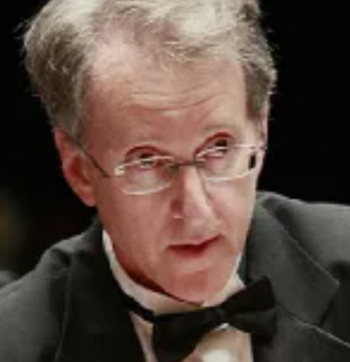
An erudite and engaging speaker, Leo Eylar returns for another fascinating lecture to the Society. His last talk with us covered “thematic transformation” – aka leitmotifs. This lecture will be… Continue reading Maestro Leo Eylar Returns
Click for full details
Join us for a Zoom meeting where Erica examines the fascinating relationship between these two 19th-century titans. Wagner openly admired Berlioz and made frequent references to him in his writings.… Continue reading Wagner and Berlioz with Erica Miner
Click for full details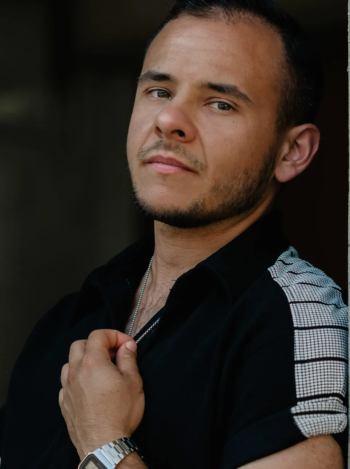
Holden Madagame recently performed the role of Mime in Das Rheingold and Siegfried with Regents Opera (London, UK) where his performance so impressed Wagner Society President, Andy Rombakis, that he… Continue reading The TRANSformation of Mime a Zoom talk with Holden Madagame
Click for full details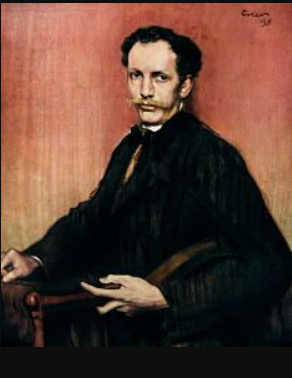
Timed to coincide with San Francisco Opera’s production of Elektra, this talk will examine the influence of Wagner on Richard Strauss and his music. Frequently seen as the successor to… Continue reading Strauss and Wagner with Professor John Muller – a Zoom Meeting
Click for full details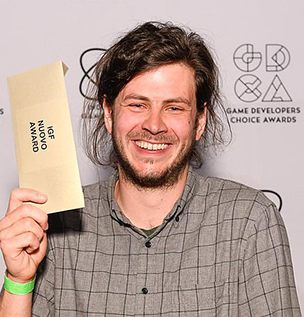
California, Gold, and….Wagner have been intertwined for almost two centuries now. David Kanaga will explore this in his fascinating talk. Those who saw his previous presentation to the Society featuring… Continue reading Das Kaliforniagold: California Wagnerisms 1848-2026 with David Kanaga
Click for full details